Dibaajimowin: Stories from this Land
On exhibit September 23, 2022 to April 16, 2023 at the Ken Seiling Waterloo Region Museum
Dibaajimowin highlights the Indigenous contributions to the history of this land. Contributions often overlooked in favour of the well established settler narrative. A narrative represented in the familiar set of murals painted by Selwyn Dewdney in 1950.
Yet, our stories do not exist alone - rather they live parallel to each other.
Dibaajimowin invites visitors to recognize how the way they look at things has been shaped. And, offers an opportunity to a look a little closer at the richness and depth of the stories that need to be told.
Anishinaabe curator Emma Rain Smith delivers an exhibit that is comforting, beautiful, airy and warm. It provides visitors with a point of connection to the land, to the stories and to each other. Emma’s vision creates a beautiful opportunity to explore the power of culture and understand a deep connection to the land.
Aambe bizindaw - come let's listen to the oral history of Urban Indigenous folks. Learn about the land, the relationships, the networks and cultural resilience.
We invite you to immerse yourself in the multimedia journey that is Dibaajimowin: Stories of this Land.

Dibaajimowin Wordmark
Dibaajimowin wordmark and graphic design by Design De Plume Inc. - An inclusive design circle that is women-led and Indigenous-owned.
Click on the images below to learn more about the exhibit:


Thanksgiving Address
The thanksgiving address is an address used to open or begin a gathering of people. It is the first thing that is said before anything important is done, and it's meant to bring everyone together in the same mindset before the meeting begins. In this exhibit, Haudenosaunee member Kelly Fran Davis, of Two Row Education Services, explains some of the things that a speaker would discuss during Ganohonyohk, highlighting the importance of human connection and listening to the stories of the people as our first form of learning.
Thanksgiving Address Translation
So now, on this day, it has become my duty to gather the words of the opening address.
So now, we will give it all our thought and carefully give thanks to all of the people, and let it be that way in our minds.
And, so now, we will give it all our thought and carefully give thanks to our Mother Earth that we rest our feet upon, and let it be that way in our minds.
And, so now, we will give it all our thought and carefully give thanks to the natural springs, the flowing rivers and all that have water in it, including the big waters, and let it be that way in our minds.
And, so now, we will give it all our thought and carefully give thanks to all of the grasses, all of the medicines, and fruits and berries of all kinds as well as the strawberry, and let it be that way in our minds.
And, so now, we will give it all our thought and carefully give thanks to the forests as well as the maple tree, and let it be that way in our minds.
And, so now, we will give it all our thought and carefully give thanks to all of the animals and all of the birds, and let it be that way in our minds.
And, so now, we will give it all our thought and carefully give thanks to our life sustainers, the Three Sisters, and let it be that way in our minds.
And, so now, we will give it all our thought and carefully give thanks to the winds, and let it be that way in our minds.
And, so now, we will give it all our thought and carefully give thanks to our grandfathers, the Thunder Beings, and Hino’ leader of them. Let it be that way in our minds.
And, so now, we will give it all our thought and carefully give thanks to our big brother the sun, and let it be that way in our minds.
And, so now, we will give it all our thought and carefully give thanks to our grandmother the moon, and let it be that way in our minds.
And, so now, we will give it all our thought and carefully give thanks to all of the stars, and let it be that way in our minds.
And, so now, we will give it all our thought and carefully give thanks to our leader, Handsome Lake, and let it be that way in our minds.
And, so now, we will give it all our thought and carefully give thanks to the Four Beings, and let it be that way in our minds.
And, so now, we will give it all our thought and carefully give thanks to our Creator, and let it be that way in our minds.
And now, we have done all that we are able to do of the opening address, it is how much we have learned, and let it be that way in all of your minds.
That’s all.
History of the Murals
Selwyn Dewdney Biography (1909-1979)
Written by Dr. Susan Neylan
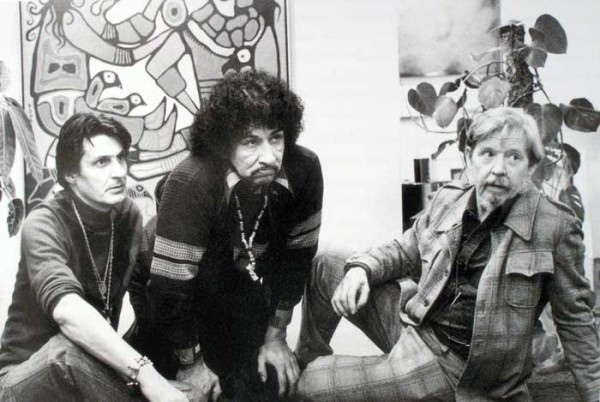
Selwyn Dewdney is the artist who painted the History of Waterloo County Murals. Beyond the first mural “Indian Times,” these murals represent a particularly settler-centric vision of the region's history, making the central story told by the paintings that of Mennonite resettlement, immigration, and especially the industrial and technological innovations that built the region into a thriving Western-based society. This is not surprising given the message the trust company that commissioned this artwork might have had wanted in having the work done. The Dibaajimowin exhibit seeks to reimagine this colonial narrative by re-centring Indigenous voices, histories, and their enduring presence in order to create a more inclusive understanding of history in this region. But how should we understand the artist who painted the original murals that sparked this conversation? Who was Selwyn Dewdney?
Born in Prince Albert, Saskatchewan, Dewdney was the son of an Anglican minister and missionary, who became a bishop of Keewatin. He grew up in northern Ontario, and as a young adult graduated from the University of Toronto with a degree in Astronomy and English, later earned his teacher’s certificate at the Ontario College of Education, and then received further training at the Ontario College of Art in the mid-1930s (Associate, OCA, with Honours). He was the husband of Irene Donner, who had been raised in Kitchener, and the father of four sons. Dewdney was also a novelist and author of several other works of non-fiction, including studies of Indigenous sacred belongings and rock art in the 1960s and 70s; he was a high school teacher; he was an innovator in art therapy—using art in the treatment of psychiatric patients, a passion he shared with Irene; he travelled widely through remote areas of Canada as a student missionary or with the Geological Survey of Canada, and notably cataloged hundreds of Indigenous rock art, pictoglyph, and petroglyph sites; and lastly, even as he moved away from producing art himself, he nurtured the careers of other artists, including the Woodland School of Art creator Norval Morriseau (Anishinaabe, from Bingwi Neyaashi Anishinaabek, formerly Sand Point Ojibwe reserve). Selwyn Dewdney died in 1979 following heart surgery.
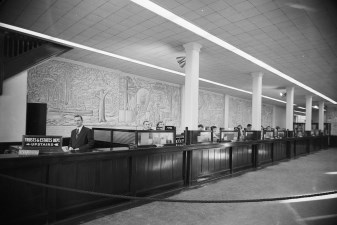
Dewdney’s murals were painted at a time when he was shifting away from creating art himself, but within that phase where he did accept commissions to create public art pieces. He painted murals in London, Brantford, Toronto, and locally here in Waterloo region for the Kitchener-Waterloo hospital. In 1949, Dewdney was commissioned by the Waterloo Trust and Savings Company to paint a series of murals depicting the history of Waterloo County. They took three to four months to complete, cost $2100, and were completed in 1950. The mural series were to hang in the bank itself, and hence it is not surprising that the subject matter focused on a stories of resettlement, industry, capitalism, urbanization, and social transformation Yet, knowing where his later interests would take Dewdney, notably the power of art to communicate and heal, and a respect for Indigenous creativity and expression, we cannot merely dismiss his intentions as entirely colonial in nature. There are tantalizing alternatives that he appears to have considered at the time, which might have seen a fuller representation of Indigenous presence and relationships.
Among his papers, donated by his family after his death, are a series of sketches for History of Waterloo County murals, including ideas regarding the colour palette he would use, and sepia pencil drawings of what look to be fairly accurate visions for what the murals became. There are also black and white photographs of what the murals looked like installed behind the tellers, so we can tell that a couple had been resized at some point in time before they had been donated to the Region of Waterloo and reinstalled in the headquarters’ main cafeteria. The sketch for the first mural, “Indian Times” is not archived in the same box with the others, however, because it had a distinctive irregular shape (it had been initially installed in the bank under a staircase), another sketch depicting different subject matter may very well have been an alternative vision for this first panel. This earlier idea not used offers us a tantalizing glimpse of what could have been, capturing some of the things that several Indigenous contributors to Dibaajimowin told us they noticed were missing in the first mural panel. For instance, there are more Indigenous people in the picture than non-Indigenous ones. There is a village indicated (through the depiction of a longhouse), fish is being smoked over a fire, and a woman and child are actively fishing with a net in a boat, steered by a male figure. This sketch depicts relational themes that echo Indigenous understandings of the region—an active and industrious Indigenous community, humans interacting with their environment, each other, and the flora and fauna within; and a vision that stressed both continuities with Indigenous ways of living and historic change. The latter notion, that of historic change, is captured best through Dewdney’s rendering of Indigenous-Settler relations through what looks suspiciously like Kanien'kehá:ka (Mohawk) leader, Thayendanegea (Joseph Brant) seated at the table conversing with a person attired in 18th-century European clothing. Was this scene intended to show the discussion of the Haldimand Tract and the Haudenosaunee relocation to the Grand River watershed area? Had he used this idea, can we imagine a different narrative than the one offered in the “Indian Times” mural that Dewdney ended up painting? That same year, Dewdney painted a series of other large-scale paintings for the Grand River Conservation Authority which had been part of a display for school children and other attendees at the Galt Fair, “Our River Valley—Past and Present”—where the stress is on soil and river management and cooperative effort for a more harmonious human-environment way of living. The first panel in this series, like the painting commissioned by Waterloo Trust, was also Indigenous in subject matter. Hence, even in the early 1950s, Dewdney was open to ideas that may be more compatible with an Indigenous sensibility about history of this area than we maybe initially believed.
References
Waterloo County Centennial Committee and the Waterloo Historical Society, “The Trail of the Conestoga,” n.p., 1952.
The Selwyn Dewdney Fonds, AFC 21, Western University Archives. Sketches for his History of Waterloo County murals can be found here, as well as photographs of when they had been first installed in the Waterloo Trust and Savings Company. Biographical material, several essays about Dewdney’s career, and copies of his publications are also included in these fonds.
Waterloo Trust
The Waterloo Savings and Trust Company was formed in 1913 to meet the growing financial needs of the community through its various departments, and it currently serves thousands of people of the county in its offices in Waterloo, Kitchener, Galt, and Preston. In 1950, Dewdney was hired by the company to paint murals that showed the history of Waterloo up until the 1940s. Correcting the gapped history in these murals was one of the primary inspirations behind this project. Shortly after, it was taken over by Canada Trust in 1968, which later merged with Toronto Dominion to become TD Canada Trust.
Steckle Farm
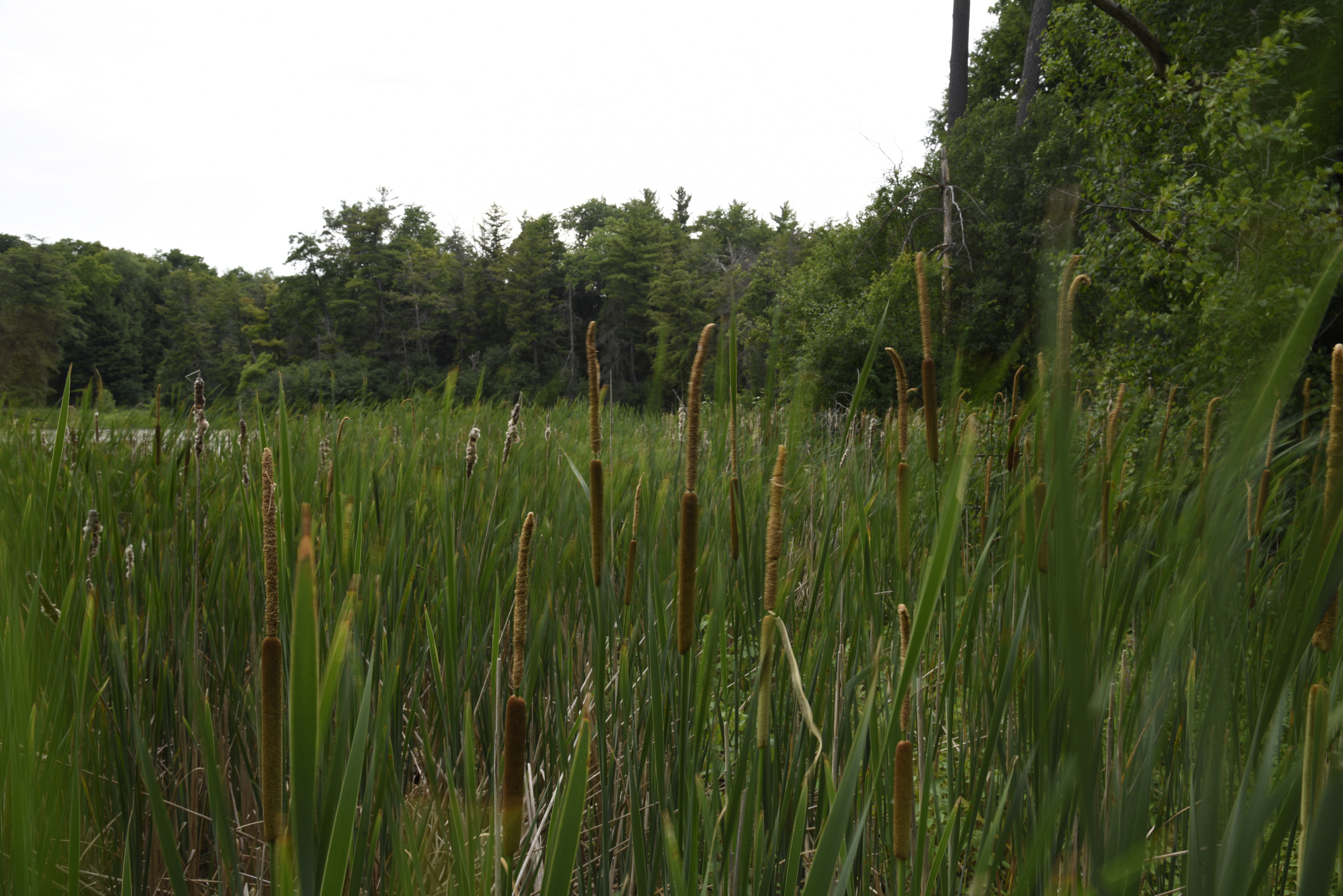
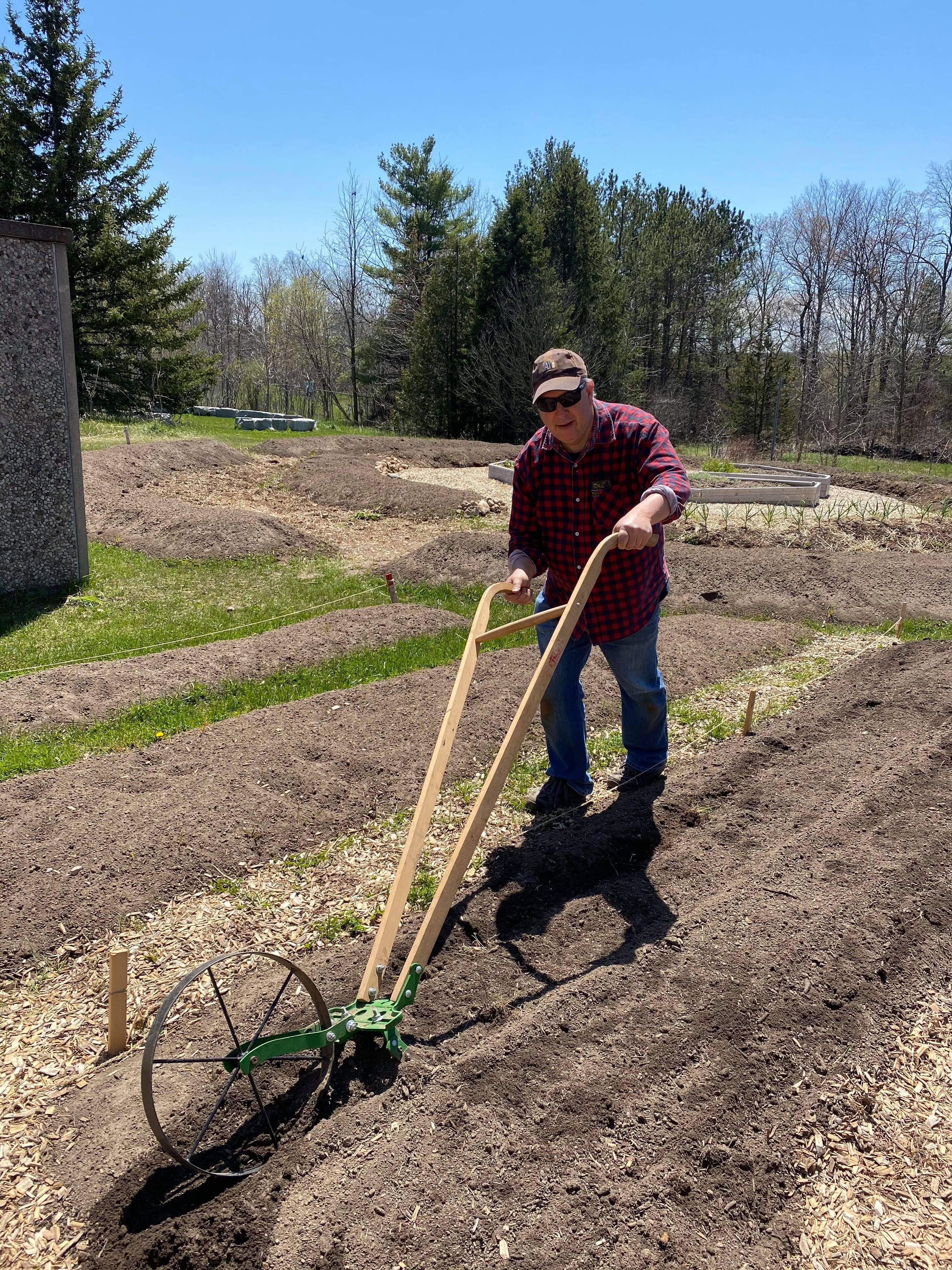
Dave's journey to Steckle Farm first started with the question "as indigenous people liv[e] in an urban setting, what is our relationship to the land? [W]hat is our relationship to the land within the city?" He started gardening to feel more connected with the land, and that's when he met Hannah Tait Neufeld and Kim Anderson, researchers of indigenous food sovereignty and security. Through gardening, they were able to find answers to questions such as what it "means to be indigenous living in the city," and came to a realization that "what identifies us as a people is our relationship to the land." Soon, the small garden plot that they started in 2016 grew to four garden plots and a sugar bush owned by White Owl. This rapid growth led them to start looking into larger plots of land, and that's when they found Steckle Farm.
Jean Steckle and her brother were the last of the Steckles to own the farm. Jean had spent her life as a health worker, having worked with the World Health Organization throughout Africa for most of her career. She then came back to Canada and then worked with an indigenous health organization across Canada. She had this connection to not a particular community, but a broad connection across Canada with indigenous people, so when she decided to put what was left of the farm in trust (about 13 acres), she put that into trust to be an educational farm. Part of their mandate was to always have a space for indigenous people to be able to farm there as well. The farm was largely unused for number of years, so when Dave and his team came knocking at the door, they were welcomed in right away. They're "farming in an area that's probably been farmed for thousands of years in some ways connected to the Chu-not-in people, and there's been some evidence of Mississauga use as well. So, there's a long history of agricultural use within there." Dave and his team spent half of their time gardening, and the other half of our time trying to figure out the history of the area because they really felt that that was important to know the story of the land that they're working on. He still has a lot of interest in the history and the stories of this land, because he thinks that as land-based workers, we have to understand beyond soil, to the spiritual and historical and ancestral roots that we're also working in as well.
Wanting to help urban indigenous people reclaim parts of their history and culture, the farm has also hosted a couple workshops to teach indigenous youth what they can do with the food once its grown. Most recently, chef Sydney Kewell was invited onto the farm to host a tortilla making day using the freshly harvested corn.
Landback Camp
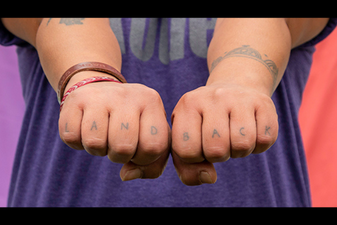
O:se Kenhionhata:tie Land Back Camp started in the summer of 2020, when a collective of Indigenous Two-Spirit individuals started occupying space in Victoria Park, Kitchener. Their intention is to create a long-term space for Urban Indigenous communities to have open and free access to land.
Visit the Land Back Camp's website to learn more about their mission and activities.