Doon Heritage Village
Closures in the Village
Due to unexpected maintenance, the Bricker Barn is temporarily closed. McArthur House is also not open this season as we work toward a new interpretation.
Doon Heritage Village is one of Waterloo Region's most popular attractions!
Expanded and more accessible stories.
Due to popular demand Doon Heritage Village will be open for select Saturdays through the fall and Thanksgiving Weekend. Join us September 12, 19, 26, October 3, 10, 11 and 12. During our extended season visitors can look forward to visiting the historic buildings, talking with costumed interpreters and exploring our expanded stories. Unfortunately the farm animals have returned to their home farms and will not be available.
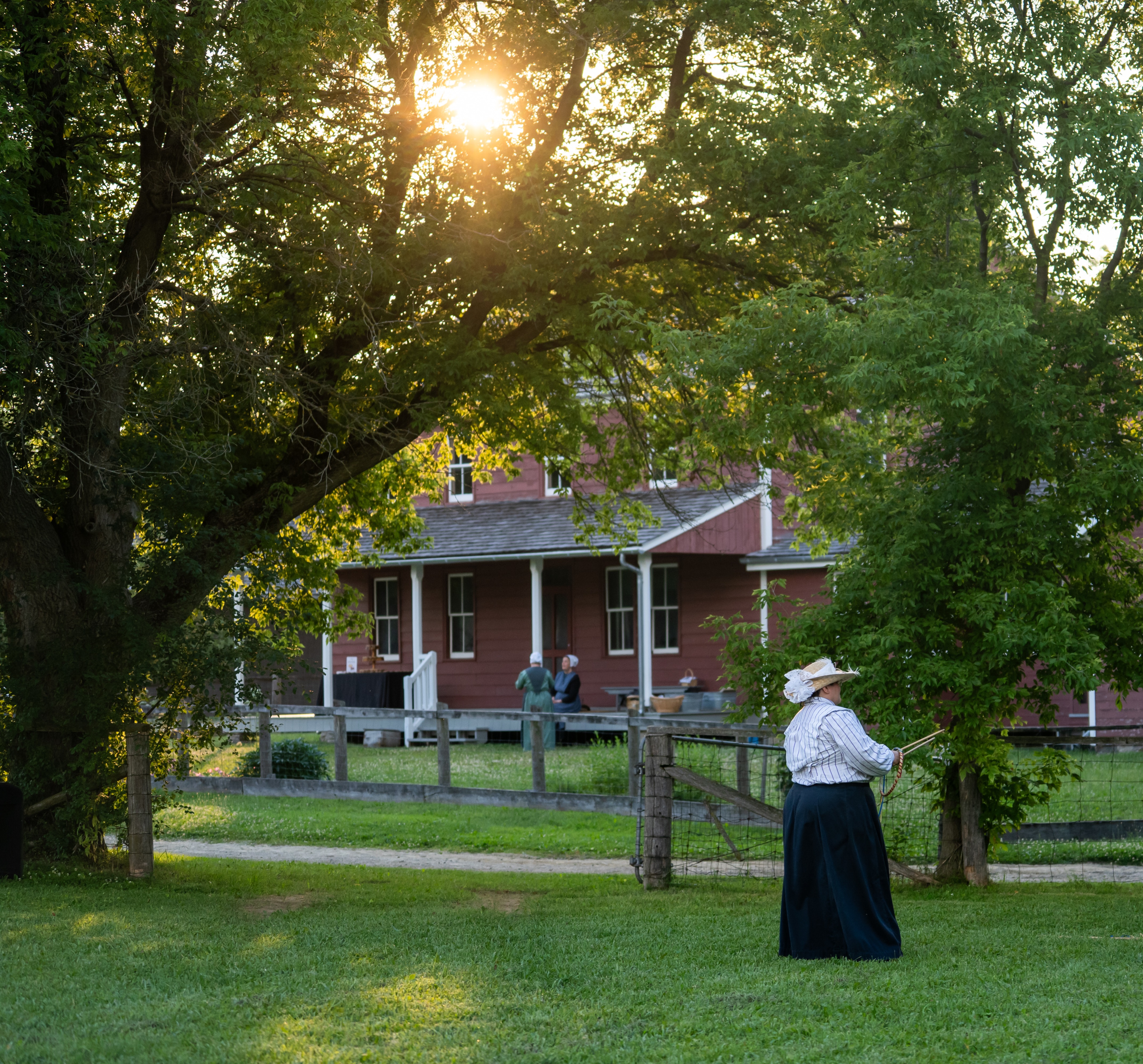
Doon Heritage Village is a picturesque 60-acre living history museum that shows visitors what life was like in rural Waterloo Region in the year 1914. The village comes to life with knowledgeable interpreters dressed in 1914 style clothing and features historic buildings, farm animals and fun activities the whole family will enjoy.
Doon Heritage Village is a place that people don’t just visit. They remember it. For many locals, it sits in that rare category of landmark where childhood field trips, seasonal traditions, and community events blur into something almost dreamlike, like a place you can picture before you can fully describe it.
Beyond its emotional pull, Doon Heritage Village is a fully immersive, living environment where visitors step into the textures and rhythms of the rich history of the region. The Village’s shops, homes, workplaces, and gardens form an interconnected world that reveals how people lived, worked, travelled, and gathered in this area at the time. It’s an experience built from authentic connections, stories, artifacts and hands-on demonstrations, offering guests a chance to slow down, learn something meaningful, and feel connected to the past in a tangible way. With an updated interpretive plan and tagline “One Village, Many Stories,” the work has extended far beyond an aesthetic refresh. The goal is to present a richer, more complete view of Waterloo Region in 1914 by broadening whose stories are told, acknowledging what’s been missing, and inviting community participation to help shape what comes next.